

How India's Compensatory Afforestation Fund is Failing Forest-Dependent Communities

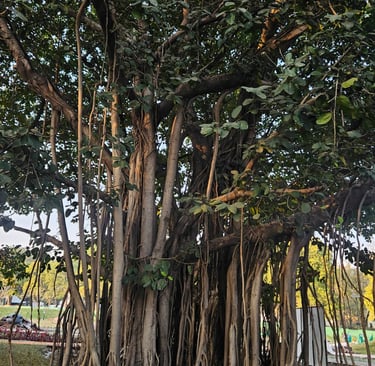
In the year 2016, India launched a fund that was expected to be the world's largest forest conservation fund. The initiative by the Compensatory Afforestation Fund Act aimed at creating a fund to recompense the loss of forests due to development projects was basically a legal tool to allow India to continue growing while still protecting the environment. In official CAMPA records, the combined balance in the Public Account of India (National Fund and State accounts)was reported at ₹24,01.42 croreas on March 2025, however, forests are still getting destroyed, tribals are being evicted, and the so-called "compensatory" afforestation is mostly a paper promise.
This is not a mere failure of implementation. It is a reflection of a blunder in Indian environmental law, which sees forests merely as resources that can be commodified and balanced through financial transactions, instead of recognizing them as vital ecosystems that are linked to fundamental rights, cultural legacies, and climate stability.
The Compensation Mirage
The concept is simple enough: where forest land is diverted for mining, roads or industries, under Section 2 of the Forest (Conservation) Act, 1980, the company needs to pay for afforestation over an equal area of non-forest land, additionally, the company needs to pay for the net present value (NPV) of the forest. The money thus collected is placed in the compensatory afforestation fund(CAF/ CAMPA) that is intended to enhance the green cover of India.
However, here lies the contradiction. As per the India State of Forest Report 2023, India has lost 63.88 square kilometres of forest cover in the "very dense forest" category since 2021, while the CAF fund has been increasing. The Comptroller and Auditor General's 2020 report revealed that only 18% of compensatory afforestation activities were actually completed across 16 states. In states like Chhattisgarh and Jharkhand, where forest diversion due to mining is common, the survival rate of the planted saplings was reported to be as low as 30%.
This statement uncovers a disturbing fact, which is that the principle of compensatory afforestation cannot be equated with compensation at all. A natural forest, with its vast variety of living things, microscopic life in the soil, capability of holding water, and its cultural importance, can not simply be recreated by planting trees. The Supreme Court in its verdict in T.N. GodavarmanThirumulpad v. Union of India acknowledged this fact but the legislation still treats forests as commodities that can be exchanged.
Constitutional Blind Spot
India's forest governance finds itself at the crossroads of three fundamental constitutional provisions: the right to life under Article 21, tribal rights under Article 244 and the Fifth Schedule, and the State's obligation to protect the environment under Article 48A. However, the implementation of the Compensatory Afforestation Fund Act (CAFCA) violates these rights in a systematic manner.
The Forest Rights Act, 2006 (FRA)stipulates that the diversion of forest land may only take place after the recognition of the individual and community forest rights of Scheduled Tribes and Other Traditional Forest Dwellers. The statute is unambiguous. Diversion cannot take place without the acknowledgment of rights. However, the reality on the ground is quite different. Studies by the Community Forest Rights-Learning and Advocacy platform reveal that in more than 64% of the forest diversion cases from 2016-2022, there was either no FRA compliance or it was done only superficially.Consider the Hasdeo Arand forests in Chhattisgarh - the top largest forest landscapes without any fragmentation in India and the habitat of Gond and Oraon communities. Even though Community Forest Rights claims are yet to be decided and there is strong opposition from the locals, the coal mining projects have been given the clearance letter one after another. The compensatory afforestation has been planned in degraded forest patches, which are a few hundred kilometers away. Thus, the people here are deprived of their forests, the means of their survival, and their fundamental rights which are protected under the constitution. And yet, saplings are grown elsewhere, which may never get a chance to flourish.This is not only a case of poor execution; it is also a breach of Articles 14 and 21 which the Supreme Court has recognized as also comprising the right to livelihood and a clean environment. When compensatory afforestation is undertaken at a remote site far away from the victims, the entire reasoning both legally and ecologically, for the notion of compensation,getstotally invalidated.
Climate Justice Deficit
In a climate focused analysis, the CAF schema appears even more alarming. India has pledged under the Paris Agreement to go an extra mile in creating a carbon sink of 2.5 to 3 billion tons of CO₂ equivalent through enhanced forest and tree cover by 2030. Natural forests especially untouched older ones play a major role as carbon sinks. However, our legal system is not only allowing their destruction but also greenwashing the changes by plantations as ecological equivalence.Science leaves no room for doubt: plantations are not forests. For example,a Nature article argued that, in the context assessed, naturalforests can be dramatically more effective than plantations of the same age at storing carbon(reported as roughly 40 times better)[6]. India's compensatory afforestation program has spawned what environmentalists have termed as "ghost forests" forest cover on government databases and satellite images that lack the biodiversity, carbon sequestration potential, and overall ecosystem services of natural forests. Yet the Ministry of Environment, Forest and Climate Change is still facilitating the granting of clearances at such a pace never seen before: information obtained from the ministry's portal reveals that between 01.01.2023 and 08.11.2023, Stage-I(in-principle) approvals covered 4,04.47 ha and Stage-II/final approvals covered 12,191.60 ha(over 16,000 hectares )of forest land was given approval for diversion in 2023 alone. This sets a distorted incentive mechanism in motion. States starved for money from extractive industries can easily turn the forests into money by using the revenues to compensate through the CAF and even they could go on to claim environment law compliance all this while forest ecosystems are vanishing.
Transparency and Accountability Deficiencies
At the very beginning, one of CAFCA's major points of emphasis was to increase transparency in the management of forest compensation funds, which were, up to that point, kept in various ad-hoc accounts. However, CAF's institutional framework with separate funds at the national, state, and district levels has essentially mutated the CAF structure into a complex bureaucratic maze where responsibility is spread thin.
The CAG audit lays bare the disturbing reality that a glaring number of State CAMPAs (Compensatory Afforestation Fund Management and Planning Authorities) were not able to provide even the most basic utilization records, forest land earmarked for compensatory afforestation was often already encroached upon or unsuitable, and monitoring mechanisms were almost non-existent. Some states had cases where large amounts of funds were not being utilised, while the diversion of forests continued.
Rethinking the Framework
We seriously want to match our climate commitments and constitutional promises with actions, then India must undertake a radical overhaul of its forest laws. Here are a few options:
To begin with, understand that a forest is not a commodity. The concept of "compensation" in law should be broadened beyond mere surface area to encompass full ecosystem safeguarding. Forest diversion needs to be regarded as an extremely rare situation, rather than as a regular and routine administrative clearance;
Secondly, make community rights the core. The National Forest Policy should be reworked so that it clearly spells out FRA compliance as a mandatory, verifiable, and non-negotiable pre-condition for any forest clearance;
Furthermore, make better governance of CAF a reality. Real-time disclosure of all fund utilization, geo-tagged monitoring of afforestation sites, and independent third-party audits must be implemented as a matter of law;
In addition, bring climate science into the forest law framework. Environmental Impact Assessments must calculate the loss of carbon sequestration caused by forest diversion and also show how the compensatory measures are going to result in climate equivalence; and
Lastly, recognise forests as rights-bearing ecosystems.Various progressive jurisdictions globally have started to extend the recognition of legal personhood to rivers and forests. India's own constitutional heritage, which is evident in court decisions on environmental trusteeship, supports such a change.
Conclusion
The Compensatory Afforestation Fund is supposed to be a huge environmental investment by India, but in reality, it has neither stopped deforestation nor supported local people dependent on forests. This was not a mistake. The legal framework, which is the main cause of this failure, sees forests only as commodities that can be traded, and ignores the fact that they are living ecosystems that are part of people's constitutional rights and survival on the planet.For the generation that will have to deal with the worsening of the climate crisis, this is really important. No matter how much reforestation we do, one hectare of natural forest lost will not be replaced during anyone's lifetime.
We, as students of law and youth citizens, should be the first to call for legal frameworks that prioritise justice for communities, ecosystems, and future generations, rather than compensation as mere fiction.The real issue is not if India has enough money to protect the forests. The question is whether we can afford not to.
ABOUT THE AUTHORS
Anshuman and Maitry are B.Sc. LL.B. student at National Forensic Sciences University (INI).
PALIPRAYAS FOUNDATION
People Advocating for Low-Carbon Impact