Misery of the Yamuna ; Parliamentary Report Calls the river a Casualty of Governance Failure in Delhi
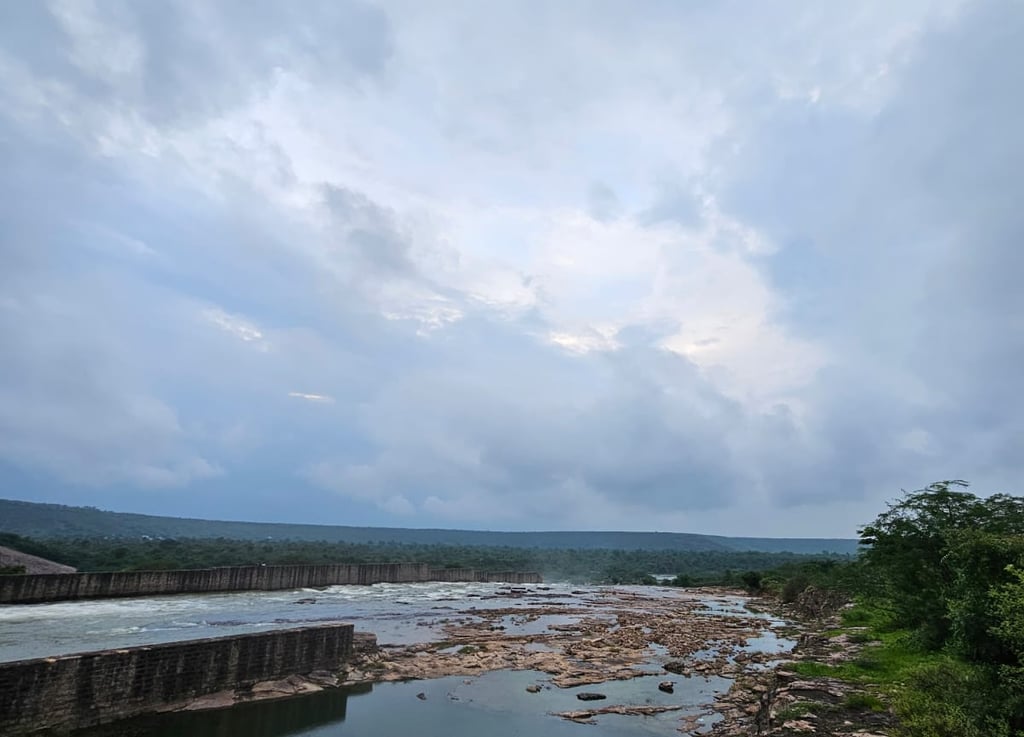
At a time when non-governmental data on environmental claims are routinely dismissed as mere opinion and the sources of evidence are questioned and maligned, the abysmal condition of the Yamuna's stretch in Delhi, as accounted for in the recently released report by the Department-related Parliamentary Standing Committee on Science & Technology, Environment, Forests, and Climate Change, stands out for its rare veracity in pinpointing the malaise of water pollution in Delhi. The committee’s 402nd report, tabled in Parliament on 12th December 2025 with data drawn from the Ministry of Jal Shakti, CPCB, DPCC, and Delhi Jal Board, respectively, has characterized the river as well-nigh biologically dead.
Chapter III of the report states, “The River Yamuna flows approximately 1,370 km and tragically, despite this long course, a mere 2% of its length—the 22-kilometer stretch passing through the National Capital Territory of Delhi—contributes to over 70% of the river's total pollution load.”
This disproportionate pollution infiltration over just a few kilometers is reflected sharply in the variance in water quality recorded at different locations in Delhi. To put the matter into perspective, the water quality at Palla, where the river enters the city, generally satisfies the primary water quality criteria. Biological oxygen demand stays low between 1.3 and 4 mg/L, dissolved oxygen ranges between 6.1 and 9.6 mg/L (above the minimum requirement of 5 mg/L), and fecal coliform levels remain within 200–1,600 MPN/100 ml, comfortably below the allowable limit of 2,500. This suggests that the river is still able to support aquatic life before it enters Delhi, but as soon as the Yamuna winds up its course in Delhi, downstream of Okhla after meeting the Shahdara Drain, fecal coliform levels burst to 40,000–8,400,000 MPN/100 ml, exceeding safe limits by more than 3,000 times; dissolved oxygen lowers down to 0.3–2.2 mg/L, generating near-anaerobic conditions; and BOD surges to an extraordinary 29–85 mg/L, exceeding permitted limits by over 30 times.
The committee attributes this conspicuous collapse in the river system primarily to sewage discharge in the river. Delhi generates approximately 792 million gallons (MGD) of sewage per day, with the installed treatment capacity standing at 764 MGD across 37 sewage treatment plants as mentioned in the chapter II of the report. Yet the Committee notes that about 18 per cent of sewage remains untreated, and even treated effluent frequently fails to meet standards due to hydraulic overloading and poor maintenance.
This failure is predominantly a failure of Delhi’s drainage system. As mentioned in Chapter II of the report, the city has 22 major drains discharging into the Yamuna, yet only nine have been fully tapped so far. Two drains—Delhi Gate Drain and Sen Nursing Home Drain—remain only partially tapped, while the two largest polluters, Najafgarh and Shahdara, are officially classified as “technically not feasible to tap in entirety”. Although these drains have been included under the Interceptor Sewer Project, this intervention is limited to tapping sub-drains rather than intercepting the full flow. Of the 182 sub-drains under their command areas, 156 have been tapped, while 26 remain untapped, with completion now pushed to December 2026. In addition, nine major drains are still yet to be tapped.
Of these untapped drains, Barapullah and Mori Gate drains are under trial, Maharani Bagh was expected to be tapped by December 2025, and the remaining six drains are projected for completion only by June 2027. The consequence of these delays is severe. Najafgarh drain alone carries nearly 60 percent of Delhi’s wastewater, making it the single largest contributor to Yamuna pollution, while Shahdara drain adds a substantial additional load.
Another deprecating point of concern is that in spite of Delhi having 13 Common Effluent Treatment Plants (CETPs) with a combined capacity of 212.3 MLD to tide over industrial effluent, these CETPs only receive 72.2 MLD of effluent; that’s a mere 34% of the installed capacity. Also, there are many industries that are being set up in unauthorized areas so as to evade environmental compliance, making the matter even worse.
The Committee also highlights the problem of illegal dumping of non-sewered waste at unmarked places. It reveals that a substantial portion of Delhi’s population relies on septic tanks and desludging services, which lie outside the purview of wastewater management. It ensues from both the weak regulation of desludging operators and the difficulty in integrating the incremental urban sprawl into a proper drainage grid. As a result, even where sewer networks and STPs exist, parallel flows of human waste continue to bypass the system entirely, rendering infrastructure investments ineffective.
The report further flags inconsistencies in sewage estimation itself. Official wastewater generation figures are based on projected water supply rather than real consumption, leading to systematic underassessment of actual sewage volumes. This explains why treatment capacity appears adequate on paper while pollution levels continue to worsen in reality.
In its recommendations, the committee shifts the focus away from the hullabaloo around river beautification and intervention done in silos to a more holistic and rigorous approach towards the river. It calls for 100 percent interception of sewage before it enters drains, mandatory reuse of treated wastewater, GPS-based tracking of desludging tankers, drain-wise pollution budgeting, and real-time monitoring at the drain level rather than at the river alone. What becomes manifest from the report is not a lack of technical solutions, funding, or regulatory powers; rather, it's the failure of coordination, enforcement, and last-mile governance.
Besides, the report's bid for an environmental flow of 23 cusecs in the lean season rests on the acknowledgement that, of all the stakeholders speaking from an anthropocentric vantage point, the river's claim as an entity vying for its survival stands out. This lens bodes of a sanguine change, given that the recommendation to reconvene the Yamuna River basin Board to deliver the same is heeded by the government with immediate effect.
PALIPRAYAS FOUNDATION
People Advocating for Low-Carbon Impact