
NGT Intervenes as Jhansi’s Historic Laxmi Talab Faces Encroachment and Ecological Collapse
Jhansi, a historical city, is famous for the 1857 rebellion sparked by Rani Lakshmi Bai, but adjacent to the fort, just a few kilometers away, there is Laxmi Talab, which also has long historical roots goes back ; it is located between the Jhansi Fort, adjacent to the dense commercial stretch of Bada Bazaar (the oldest market of Jhansi), and Narayan Bagh, which is often called the Green Belt of Jhansi. Reports suggest that it was built during the Maratha period in the 17th century and was then a crucial source of water for the city. What makes this more culturally connected is its association with Rani Lakshmibai, who is believed to have frequented the nearby Lakshmi temple and crossed the same Talab. Today, however, Laxmi Talab, as well as other lakes of our country, represents not heritage but a systematic collapse of urban environmental governance.
The story goes back to 1984 when, for the first time, the Jhansi Development Authority was established, and it prepared the Jhansi Master Plan in 2001. In that plan, the authourities identified identified the ecological importance of this area and earmarked 198.38 hectares of land around Laxmi Talab and Narayan Bagh which were to be developed as “नगर पार्क”. This planning vision was later not abandoned in later years but it was not worked upon either. After 20 years, a new Jhansi Master Plan was made in 2021, and again this zone was highlighted as नगर पार्क, which the document says was essential for environmental balance and public health.
But for almost 40 years, since the establishment of the Jhansi development authority in 1984, nothing was seriously taken despite being documented in the Master plans, but what followed was a steady conversion of ecological land into illegal real estate. Even as early as 20 July 2015, the Jhansi Development Authority issued notices under Section 27 of the U.P. Urban Planning and Development Act, 1973, against several persons for illegal plotting and construction in the proposed park area. Initially, about 80 people were identified. Still, the enforcement did not come. Encroachments increased manifold over a period of time, and surveys in the public domain in 2023 showed there were nearly 900 illegal constructions in and around the Laxmi Talab-Narayan Bagh zone.
The governmental failure to preserve the environment has had an effect on the ecology; the effects of this failure are now revealed through this verdict of the principal bench of NGT. The National Green Tribunal issued a directive on December 14, 2023, noting that a large part of Laxmi Talab has been encroached on and degraded, and ordered the establishment of a joint committee to investigate the encroachments at Laxmi Talab. During hearings in 2024–2025, the principal bench of the National Green Tribunal under Justice Prakash Srivastava reviewed the report of the joint committee that established wide-scale violations occurring in the name of beautification.
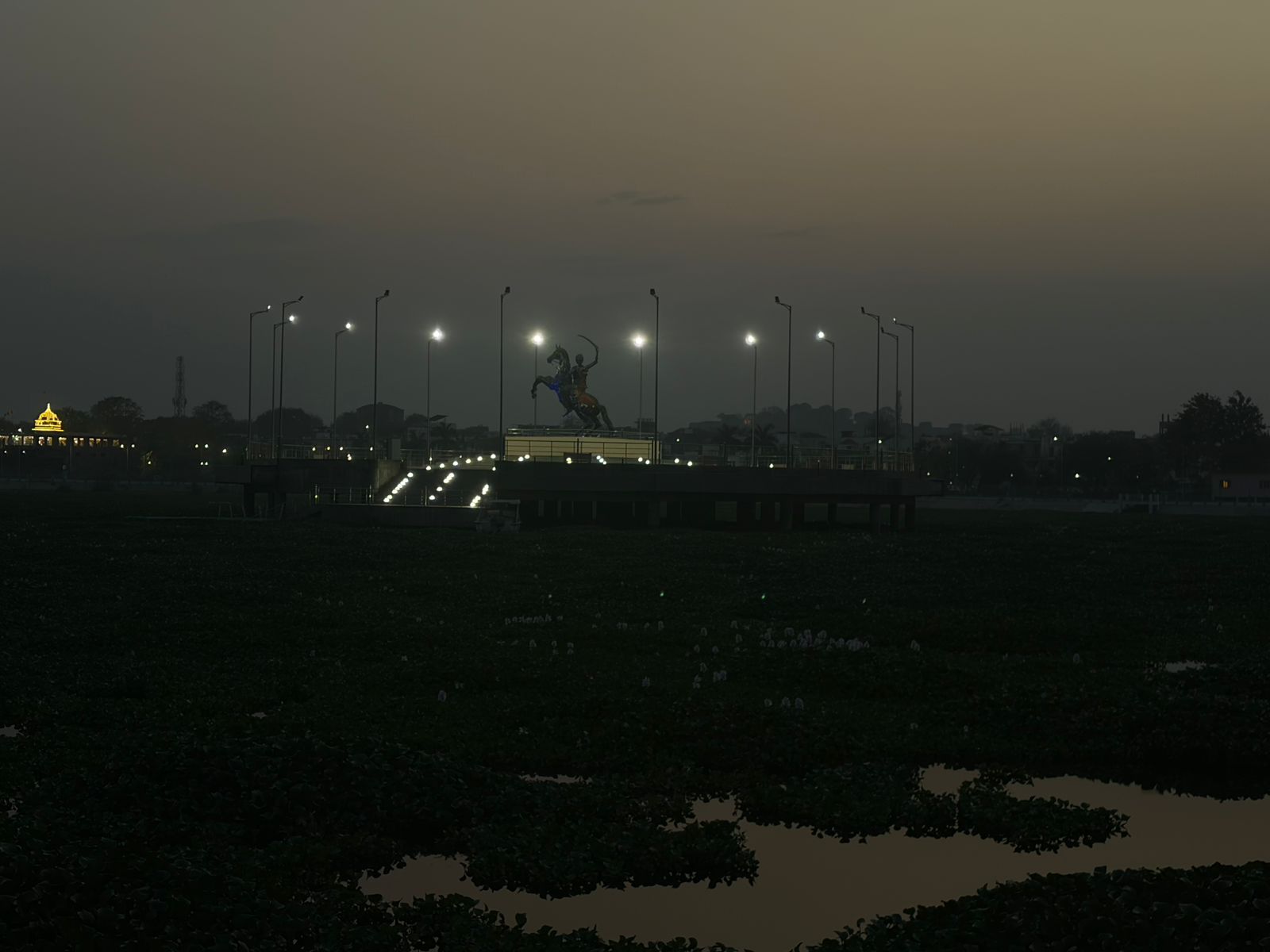
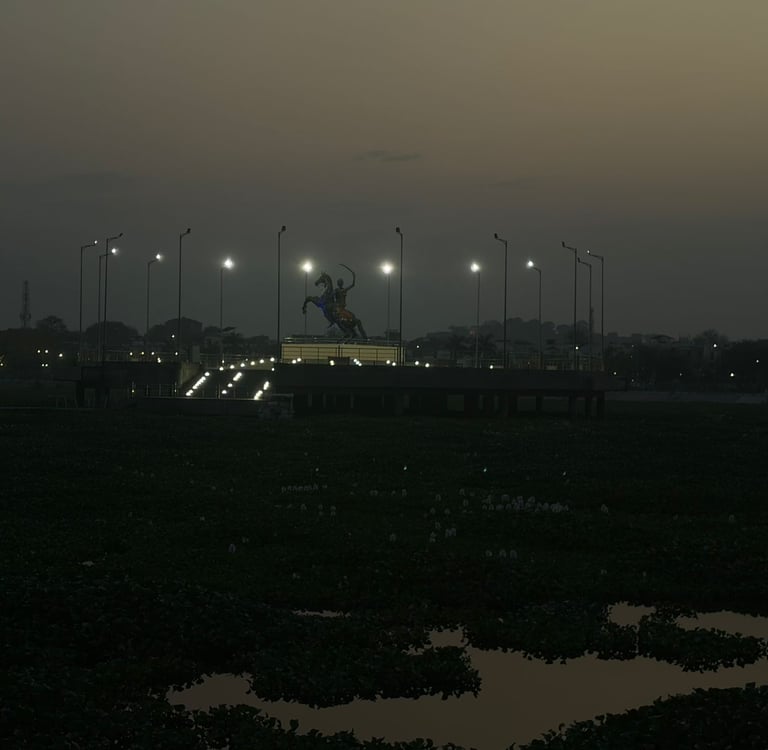
According to the committee's findings, Laxmi Talab, which originally spanned 33.068 hectares, has now been reduced to just 20.76 hectares of actual water spread. Due to the massive amount of concrete added to Laxmi Talab, much of the ecosystem has been destroyed. For example, a 3.5m-wide concrete pathway surrounding the pond, a statue in a concrete island in the pond, bunds, drainage, parking, fencing, and many other projects have been developed under Jhansi Smart City. Experts have warned that these types of alterations will permanently change the natural hydrology of a water body, and no longer allow the water body to clean itself, and instead become a stagnant pool.
The situation in Laxmi Talab regarding its water is very serious. A joint committee assessed the water of Laxmi Talab and rated it as "E" or category "E", which is the lowest possible rating for water quality according to the dissolved oxygen (DO) and high bacterial contamination data. Because of this rating, the water at Laxmi Talab is unsafe for almost any type of human use. The only types of acceptable uses for which this water could be used are as a limited source of irrigation (agricultural), or for limited industrial cooling.
Also, another major cause of pollution is the 26 million litres per day (MLD) sewage plant, which was constructed for approximately ₹35 crore, but does not operate at capacity. There are now thousands of millions of litres of untreated and partially treated sewage from multiple drains and neighbouring residential colonies being continuously discharged into the lake.
The Tribunal has now directed authorities to prepare an action plan to restore the lake’s ecological integrity, involving the Uttar Pradesh Pollution Control Board and the Environment Department of Bundelkhand University. While these directions are necessary, they come after decades of inaction that have allowed the damage to become structural and potentially irreversible.
The question is whether a 198-hectare designated green zone in the heart of a historic city that we so proudly claim can be reduced to encroachments and concrete, despite repeated warnings and legal interventions. It raises a fundamental question: is environmental governance in our cities still about protection, or has it become a process of managed decline?
PALIPRAYAS FOUNDATION
People Advocating for Low-Carbon Impact